SEO (Search Engine Optimization)
Search Engine Optimization (SEO) is the process of improving a website’s visibility on search engines like Google and Bing so that it appears higher in search results when users look for relevant information. It involves optimizing website content, using the right keywords, improving site speed, making the website mobile-friendly, and earning quality backlinks from other trusted sites. SEO focuses on both technical improvements and creating valuable, user-friendly content that answers people’s questions. Unlike paid advertising, SEO generates organic traffic, which means visitors find your website naturally through search results. When done correctly, SEO helps increase website traffic, build credibility, and support long-term online growth.
Types of SEO in Digital Marketing
On-Page SEO
On-Page SEO refers to the optimization techniques that are applied directly on the website pages to improve search engine rankings. It focuses on optimizing content and HTML elements so search engines can understand the page better. Important factors include keyword usage, title tags, meta descriptions, headings, image optimization, internal linking, and high-quality content.Off-Page SEO
Off-Page SEO involves activities performed outside the website to improve its authority and reputation. The main goal is to increase the website’s trust and credibility in search engines. This is mainly achieved through backlinks from other websites, social media promotion, guest blogging, influencer marketing, and online brand mentions.Technical SEO
Technical SEO focuses on improving the technical aspects of a website so that search engines can easily crawl, index, and rank the website. It includes optimizing website speed, mobile friendliness, XML sitemaps, website security (HTTPS), fixing broken links, improving site structure, and ensuring proper indexing of web pages.Local SEO
Local SEO is used to optimize a website for location-based searches. It is especially useful for businesses that serve customers in a specific area. Local SEO includes optimizing Google Business Profile, using location-based keywords, collecting customer reviews, and listing the business in local directories.E-commerce SEO
E-commerce SEO focuses on optimizing online stores to increase visibility in search engine results. It involves optimizing product pages, product descriptions, category pages, images, and improving the shopping experience so customers can easily find and buy products online.Mobile SEO
Mobile SEO ensures that a website works properly on smartphones and tablets. It focuses on responsive design, fast loading speed, mobile-friendly layout, and easy navigation for mobile users.Voice Search SEO
Voice Search SEO optimizes content so that it can appear in results when users search using voice assistants like smart speakers or mobile voice search. It focuses on natural language keywords and question-based search queries.Content SEO
Content SEO focuses on creating high-quality, relevant, and valuable content that satisfies user search intent. It involves proper keyword placement, structured content, engaging writing, and regular content updates to attract more visitors.
Importance of SEO (Search Engine Optimization)
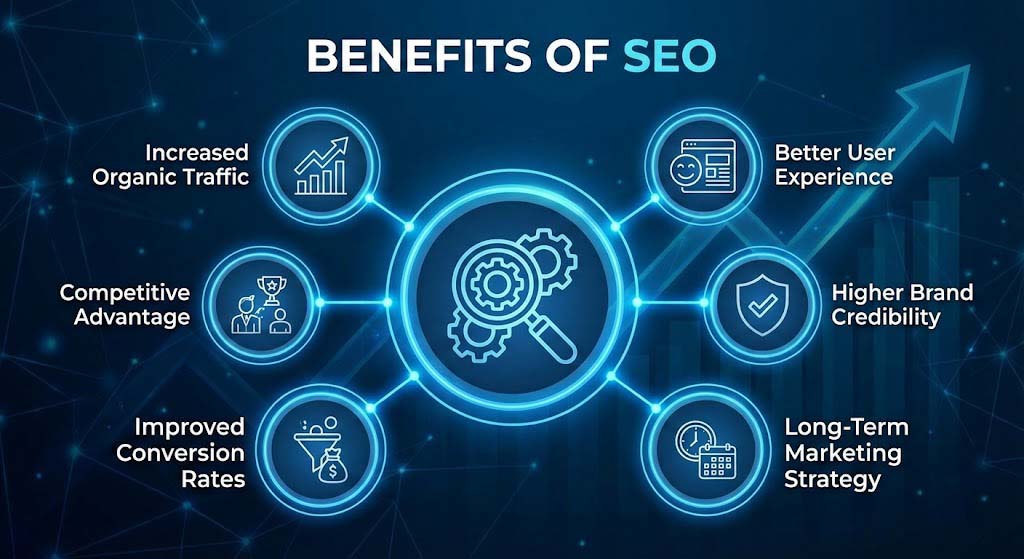
Increases Website Visibility
SEO helps websites appear higher in search engine results. When a website ranks on the first page, more people can easily find it.Drives Organic Traffic
SEO brings free traffic to a website from search engines without paying for advertisements.Builds Credibility and Trust
Websites that rank higher in search engines are often seen as more trustworthy and reliable by users.Improves User Experience
SEO encourages websites to be fast, mobile-friendly, and easy to navigate, which improves the overall user experience.Cost-Effective Marketing
Compared to paid advertising, SEO is a cost-effective strategy that provides long-term benefits.Increases Brand Awareness
When a website appears frequently in search results, more people become familiar with the brand.Helps Target the Right Audience
SEO uses keywords to attract users who are actively searching for specific information, products, or services.Provides Long-Term Results
Good SEO practices can help a website maintain strong rankings for a long time.Gives Competitive Advantage
Businesses that use SEO effectively can outperform competitors in search engine rankings.Supports Business Growth
More traffic and visibility can lead to more leads, customers, and increased revenue.
Why Use SEO Tools?
Identify the best keywords for your website
Track your ranking on search engines
Analyze competitors’ strategies
Find and fix technical SEO issues
Improve content performance and visibility
Identify the best keywords for your website
Track your ranking on search engines
Analyze competitors’ strategies
Find and fix technical SEO issues
Improve content performance and visibility
Popular SEO Tools
SEO not only improves search rankings but also builds credibility, trust, and long-term online growth. Unlike paid advertising, SEO provides sustainable results over time when applied consistently. Overall, SEO plays a vital role in helping businesses grow online, attract potential customers, and achieve their marketing goals effectively.